Understanding Party Wall Agreements
_1.jpeg)
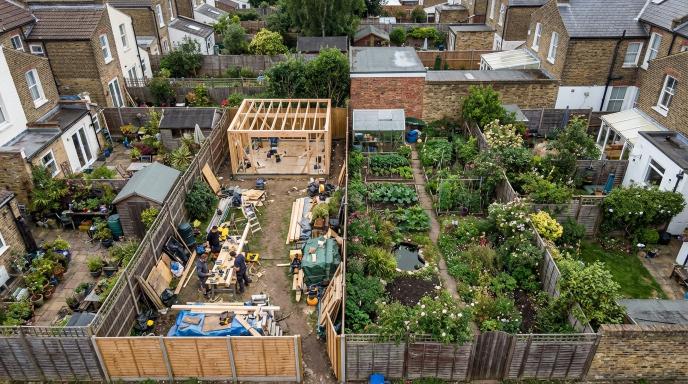
The Party Wall etc. Act 1996 governs shared structures in England and Wales, affecting many terraced and semi-detached homes. This law applies to tightly packed London plots where garden rooms often border neighbouring properties. It ensures adjoining owners protect their legal rights during building works.
A party wall falls under Section 1 if it sits on the land boundary or stands astride it. Section 4 defines floors or ceilings between buildings as party structures. Section 12 covers exposed sides where works might impact neighbours.
The Royal Institution of Chartered Surveyors notes around 120,000 notices served annually under the Act. Real London cases highlight its relevance. In terraced homes, a Section 1 notice resolved a garden room build on a shared boundary wall.
Other examples include semi-detached excavation notices under Section 6 for foundations near adjoining structures. A boundary fence rebuild in a narrow garden required agreement to avoid neighbour disputes. Full details appear in the Party Wall Act 1996 text.
Legal Definition and Scope
Section 1 covers walls on the line of junction or astride boundaries. Section 6 requires notice for excavations within 3-6m affecting adjoining structures. These rules protect garden rooms on urban plots from construction disputes.
A party fence wall includes timber boundary fences separating properties. Party structures cover shared chimney breasts in terraced houses. Party walls often mean London garden boundary walls in high density housing.
- Statutory distances limit structures over 2.5m tall to 3m depth from the boundary.
- The 6m line of junction applies to deeper excavations in clay subsoil.
- Schedule 2 notifiable works include foundation works for garden studios or home offices.
For garden rooms, serve a section 1 notice for boundary walls or a section 6 notice for digs near neighbours. Specialist party wall surveyors draft the legal agreement. This prevents issues like vibration risks in narrow gardens.
Bespoke Garden Rooms
Every Garden Is Unique — Your Room Should Be Too
From awkward L-shaped plots to ambitious multi-use briefs, London's best installers design garden rooms that fit your space and your life perfectly.
Party Walls in London Garden Contexts
London's 4.2m average garden depth creates unique challenges for 1.8 million terraced homes with shared boundary walls. These tightly packed London plots often limit space for garden rooms like home offices or studios. Adjoining owners must navigate the Party Wall Act to avoid disputes.
In high density housing, party wall agreements become essential before any building works. Terraced houses dominate, with narrow gardens amplifying risks from excavation or foundations. Councils like Islington enforce strict plot density guidelines for rear extensions and outbuildings.
Common setups include zero-lot-line shared walls, 150-300mm boundary walls, and party fence walls with 0.5m gaps. Each requires specific construction notices under the Act, such as section 1 or section 6. Specialist surveyors help draft these to protect neighboring properties.
Urban gardening projects, from garden studios to granny flats, often trigger notifiable works. Issues like vibration risks and access rights demand a schedule of condition. Early agreement prevents neighbor disputes and ensures legal rights under the Act.
Common Boundary Configurations
Type 1: Full-height brick party walls stand as the most common in Victorian terraces. These shared walls demand a party wall agreement for any notifiable works like garden room foundations. Type 2: Low boundary walls under 2m typically need only a section 1 notice.
The table below outlines key configurations, their prevalence, heights, notice types, and example boroughs. Use it to identify your setup before planning garden outbuildings.
| Configuration | Prevalence | Typical Height | Notice Required | Example Borough |
|---|---|---|---|---|
| Zero-lot-line shared walls | High in terraces | Full building height | Section 6 notice | Hackney terrace |
| 150-300mm boundary walls | Common in semis | 1.8-2.5m | Section 1 or 6 notice | Wandsworth semi-detached |
| Party fence walls | Frequent in mews | 1.8-2m | Section 1 notice | Kensington mews |
| Conservation area variations | Restricted zones | Varies with approval | Full Party Wall Act | Camden |
In a Hackney terrace, full shared walls require surveyors for excavation notices due to deep excavations nearby. Kensington mews often feature party fences, needing checks for freeholder consent. Wandsworth gap walls allow simpler section 1 notices but still risk disputes over line of junction.
Camden conservation areas add layers, like prior approval for height restrictions. Always commission a party wall surveyor to schedule conditions and draft the award document. This covers reasonable costs and quiet enjoyment for all adjoining owners.
When Agreements Are Required for Garden Rooms
Party wall notices trigger for most garden rooms over 2.5m tall or with foundations within 3m of boundaries. In tightly packed London plots, these rules from the Party Wall Act protect adjoining owners from damage during construction. Serve notices early to avoid delays on your garden studio or home office build.
Key triggers include foundations within 3m plus depth or 2.5m height under Section 6. New walls built on the boundary line require a Section 1 notice. These apply to terraced houses and semi-detached homes with narrow gardens.
Raising or lowering existing walls by more than 350mm needs notification. Cutting into a party wall beyond cement renderer thickness also triggers action. Demolition and rebuild of shared structures demand a full party wall agreement.
Here is a simple diagram of common triggers:
| Trigger Type | Distance/Condition | Section |
|---|---|---|
| Foundations | Within 3m + depth | 6 |
| New wall on boundary | 0mm (line of junction) | 1 |
| Raise/lower wall | >350mm | 4 |
| Cut into wall | >cement renderer | 2 |
| Demolition/rebuild | Shared structure | 2 |
Triggers: Excavation, Building Height, Proximity
Excavate >1m within 3m? Serve Section 6 notice 2 months prior; build >2.5m tall within 3m? Same requirement. These rules safeguard neighboring properties in high density housing like London boroughs. Plan ahead for your rear extension or garden outbuilding.
- Excavation follows a depth x distance rule: 3m deep within 3m, or 4m deep within 4.5m of the boundary.
- Height triggers apply if new structures exceed 2.5m within 3m of shared walls.
- Proximity rules mean zero distance for builds on the boundary line, like a new fence or wall.
- Vibration monitoring is often required for deep excavations to prevent damage claims.
Consider a 3m x 3m room on a tight plot: it needs structural engineering calcs and specialist notification. Hire a party wall surveyor to draft the construction notice. This ensures legal rights and quiet enjoyment for all.
For semi-detached homes, check foundation works like mini piles or raft foundations. Always schedule a dilapidation survey before starting. Adjoining owners can request reasonable costs for their surveyor under the Act.
The Party Wall etc. Act 1996 Essentials
The Act creates statutory rights ignored by only 12% of London developers without consequences (Ramboll study 2022). It applies to shared walls and boundaries in tightly packed London plots, especially for garden rooms like home offices or studios. Homeowners must follow its rules to avoid disputes with adjoining owners.
Key sections cover new walls on boundaries under Section 1, adjacent excavations under Section 2, and notifiable works under Section 6. Section 10 outlines dispute resolution via surveyors, while Section 12 details liability for damage. Timelines require 1-month or 2-month construction notices depending on the work.
Average award costs range from £500 to £2,500 (APWA 2023), covering surveyor fees for terraced houses or semi-detached homes with narrow gardens. Use RICS or UK Government downloadable notice templates for Section 1 notices or Section 6 notices. Always serve notices to protect legal rights during urban gardening projects.
For a garden studio near a party fence, send a Section 6 notice for foundation works to adjoining owners. This prevents neighbor disputes over vibration risks or access rights. Specialist party wall surveyors ensure compliance in high density housing.
Section 1: New Walls and Line of Junction
_2.jpeg)
Section 1 applies when building a new wall on the line of junction with neighboring properties. Serve a section 1 notice at least one month before starting, ideal for boundary walls in rear extensions or garden outbuildings. Adjoining owners can agree or request modifications.
In London boroughs with plot density issues, this covers log cabins or prefabricated rooms astride shared boundaries. Surveyors draft a legal agreement if consent is given. Failure to notify risks construction disputes and enforcement.
Section 2: Adjacent Excavations and Foundations
Section 2 requires a 2-month excavation notice for digs within 3 metres of adjoining structures, deeper than the neighbor's foundations. This protects against damage in deep excavations for garden rooms on clay subsoil with heave risks. Include structural engineering details in the notice.
For narrow gardens in terraced houses, notify for mini piles or raft foundations near property boundaries. Adjoining owners get rights to secure their side. A schedule of condition prevents claims over cracks from vibration.
Section 6: Notifiable Works on Shared Structures
Section 6 mandates a one-month notice for notifiable works like cutting into a party wall for beams in garden studios. It covers alterations to shared walls in semi-detached homes or side returns. Quiet enjoyment of neighboring properties must be maintained.
Examples include flashing for green roofs or access for insulated walls. Surveyors inspect beforehand via a dilapidation survey. This avoids noise complaints during weekend builds of modular garden offices.
Sections 10 and 12: Disputes, Liability, and Timelines
Section 10 appoints dispute surveyors if adjoining owners disagree, leading to a binding award document. Section 12 holds the builder liable for reasonable costs of repairs. Use the resolution process with RICS surveyors or APWA members for fair outcomes.
Timelines are strict: respond to notices within 14 days, or surveyors step in. In conservation areas, combine with planning permission checks. Shared expenses apply, covered by professional indemnity insurance.
Neighbour Notification Process
Serve notices personally or by recorded delivery; a 14-day response is required or it triggers 'deemed dissent' and the need for surveyors. This starts the formal process under the Party Wall Act 1996 for garden rooms on tightly packed London plots. Adjoining owners must receive clear details of notifiable works like foundation excavations.
First, identify adjoining owners using Land Registry title plans, available for a small fee per title. Check for freeholders, leaseholders, and anyone with interest in shared walls or boundary walls. This step avoids disputes in high-density terraced houses or semi-detached homes with narrow gardens.
Draft notices using RICS templates or standard formats, including precise descriptions of works such as building a garden studio near the line of junction. Serve them correctly via recorded delivery to prove receipt. A sample notice might read: 'Notice under Section 1(2) of the Party Wall Act 1996 to construct a garden room adjacent to the party fence wall.'
Handle responses within the 60-day timeline: owners have 14 days to consent or dissent; dissent leads to surveyors appointing and drafting a legal agreement. Use a simple diagram: Day 0 (serve notice), Day 14 (response deadline), Day 60 (works can start if no agreement). Track everything to prevent neighbor disputes over rear extensions or garden outbuildings.
Serving Notices: Types and Timelines
Line of Junction Notice requires 1 month notice; Excavation Notice needs 2 months; both demand a clear works description. These apply to building garden rooms, home offices, or summer houses on urban plots near neighboring properties. Vague descriptions often lead to rejection, as do notices to wrong recipients.
Use exact wording like 'Notice under Section 1(2)/1(5)/6 of Party Wall Act 1996' to comply with legal rights. Common errors include incomplete details on foundation works or deep excavations, risking delays in tightly packed London plots. Always specify structural engineering plans for vibration risks or noise complaints.
| Type | Purpose | Notice Period | Example Works |
|---|---|---|---|
| Line of Junction (Section 1) | Build on or astride boundary | 1 month | Garden studio wall on line of junction |
| Party Structure (Section 3) | Works to shared walls | 2 months | Flue or beam insertion in party wall |
| Excavation (Section 6) | Dig within 3-6m of structures | 2 months | Deep foundations for log cabin |
| Adjacent Excavation (Section 6) | Protect adjoining structures | 1 month | Trench for prefabricated room base |
After serving, prepare for access rights, schedule of condition, or dilapidation survey by party wall surveyors. In conservation areas or with listed buildings, combine with planning permission checks. This ensures smooth urban gardening projects without construction disputes.
Appointing Surveyors and Costs
London RICS surveyors and APWA members charge £1,200-£2,800 per party wall award. Costs typically shared 50/50 unless disputes arise. This applies to garden rooms on tightly packed London plots where notifiable works like foundation works affect shared walls or boundary walls.
Three main surveyor types exist for party wall agreements. A sole surveyor costs £800-£1,200 and suits cases with no disputes. Both adjoining owners appoint one neutral expert to draft the award document.
An agreed surveyor runs £1,000-£1,500 and works when parties select the same professional. For complex section 6 notices involving deep excavations near neighboring properties, this option keeps expenses lower. The third type, a 3-surveyor party, exceeds £2,400 with each side hiring their own plus a third to agree.
| Surveyor Type | Cost Range | Best For |
|---|---|---|
| Sole Surveyor | £800-£1,200 | Simple garden studios, no disputes |
| Agreed Surveyor | £1,000-£1,500 | Mutual agreement on semi-detached homes |
| 3-Surveyor Party | £2,400+ | Disputed rear extensions, terraced houses |
Consider these London firms for party wall surveyors: Bear Surveyors, Marlowe Fire & Security, E&M Surveyors. Hourly rates range £180-£250. Experts recommend checking professional indemnity insurance before appointing for urban gardening projects like log cabins on narrow gardens.
Cost Allocation Under Section 10(14)
_3.jpeg)
The Party Wall Act outlines cost allocation in Section 10(14). The building owner pays reasonable costs for surveyors unless the adjoining owner causes delays. For garden outbuildings, this means shared expenses often split equally on high density housing plots.
If neighbors request a schedule of condition or dilapidation survey, the building owner covers it. Disputes over vibration risks from piling foundations shift costs to the party at fault. This protects quiet enjoyment for all in conservation areas or listed buildings.
Practical example: In terraced houses, a section 1 notice for a garden office leads to 50/50 surveyor fees. Refusal to agree prompts each side to pay their own, minimising overall outlay. Always document construction notices to support fair shared expenses.
Choosing the Right Surveyor for London Plots
For tightly packed London plots, select specialist surveyors experienced in plot density issues. RICS or APWA members handle neighbor disputes over access rights for home offices or summer houses. Prioritise those familiar with London boroughs and clay subsoil challenges.
Hourly rates of £180-£250 reflect expertise in excavation notices and heave risks. Firms like Bear Surveyors excel in semi-detached homes with shared walls. Request quotes covering award document preparation and site visits for prefab rooms.
Actionable advice: Compare at least three quotes for your party wall agreement. Verify insurance cover and past work on rear extensions or garden studios. This ensures smooth resolution for boundary wall works amid urban development pressures.
Schedule of Condition and Rights of Access
Pre-work dilapidation surveys are mandated for all notifiable works to protect against damage claims. These surveys create a baseline record of shared walls and neighboring properties before starting garden room builds on tightly packed London plots. They help prevent disputes under the Party Wall Act.
Access rights allow adjoining owners to enter properties with 14 days notice for monitoring. This covers scaffolding rights near boundary walls and checks for vibration or noise from foundation works. Party wall surveyors oversee these to ensure quiet enjoyment for all parties.
A RICS template guides the schedule of condition protocol. Compensation rules require covering any proven damage, with costs allocated reasonably in the award document. Insurance requirements include professional indemnity cover for surveyors handling section 1 notices or section 6 notices.
For garden studios or home offices in terraced houses, these measures reduce risks from vibration risks during mini piles or excavations. RICS surveyors or APWA members document everything to support legal agreements. This protects against neighbor disputes in high density housing.
Documenting Pre-Work State
Photograph and video every 1m² of exposed party wall plus crack monitoring with 0.3mm tell-tales. This step-by-step dilapidation survey captures the pre-construction state for garden rooms on narrow gardens. It forms the core of your schedule of condition.
Start with external photos using 360° views from tools like DJI Mini 3 Pro around the line of junction. Next, assess internal condition with a laser level for levelness on shared walls in semi-detached homes. Map cracks wider than 0.5mm to track potential movement from building works.
Include a drain CCTV survey to check for issues near property boundaries, followed by a RICS-compliant report. Use this checklist for thoroughness:
- External 360° photos of party wall and boundaries
- Internal laser level readings and crack mapping
- Tell-tales on 0.3mm+ cracks
- Drain CCTV for underground connections
- Full written report with dated images
Before-and-after examples show a hairline crack stable post-build, proving no damage from excavation notice works. Specialist surveyors ensure the report holds up in construction disputes or tribunal appeals. This protects urban gardening projects in London boroughs.
Resolving Disputes and Awards
Surveyors resolve 95% of party wall disputes effectively, avoiding lengthy court battles. County Court appeals often cost over £5,000 and take around 18 months, making early resolution key for garden room projects on tightly packed London plots.
The standard resolution process follows a clear path: no response to a section 1 notice or section 6 notice counts as dissent, prompting surveyor appointment and issuance of an award document. This protects adjoining owners during notifiable works like foundation excavations near shared walls.
Three main paths exist for settling neighbor disputes. An agreed surveyor handles most cases successfully, three surveyors manage complex issues, and mediation offers a cost-effective alternative at around £800.
Sample award document clauses typically cover access rights, schedule of condition, reasonable costs, and quiet enjoyment. Enforcement occurs via Magistrates Court if needed, ensuring compliance for urban gardening builds like garden studios in high density housing.
Process Flowchart for Dispute Resolution
The party wall agreement dispute process starts with serving a construction notice. If the adjoining owner dissents or ignores it, the flow moves to appointing a party wall surveyor.
Key steps include: No response triggers deemed dissent after 14 days.Building owner appoints a surveyor, who invites the neighbour to agree or nominate one.Surveyors prepare the award document, outlining works, protections, and costs for garden rooms on narrow gardens.Parties comply, or disputes escalate to the three-surveyor route.
This structured approach minimises delays for rear extensions or home offices near boundary walls. Specialist surveyors, often RICS or APWA members, document vibration risks and noise complaints from deep excavations.
For terraced houses in London boroughs, early surveys prevent issues like soil conditions affecting shared foundations. Always record a dilapidation survey before starting.
Three Resolution Paths
The first path uses an agreed surveyor, ideal for straightforward garden outbuildings. Both parties share costs, and the surveyor drafts a binding legal agreement covering line of junction works.
Path two involves three surveyors: each owner nominates one, and they appoint a third if needed. This suits complex cases like mini piles near neighbouring properties in semi-detached homes.
Mediation, the third path, costs about £800 and works well for minor construction disputes. Neutral mediators help negotiate terms for insulated bases or green roofs without formal awards.
Choose based on dispute scale; agreed surveyors resolve most party wall Act issues quickly. Ensure professional indemnity insurance covers your party wall surveyor.
Sample Award Document Clauses
_4.jpeg)
A typical award document includes clauses on notifiable works, such as excavation notice requirements for raft foundations. It specifies protection measures like root barriers against tree roots.
Common terms cover schedule of condition photos, access rights for structural engineering checks, and cost allocation for shared expenses. For example: "The building owner shall bear reasonable costs of surveys for adjoining properties."
Clauses address quiet enjoyment, limiting noise from weekend builds of modular garden studios. They also mandate compliance with building regulations and planning permission.
Customise for London specifics like conservation areas or flood risk zones. Retain the document for enforcement if disputes arise over drainage connections or utility lines.
Enforcement via Magistrates Court
If an award document is ignored, apply to Magistrates Court for enforcement. This upholds legal rights for works like side returns on tightly packed plots.
Courts can order compliance, award costs, or issue injunctions against unauthorised building works. Provide evidence like the party wall agreement and proof of service.
Avoid escalation by using mediation services first. For high-stakes projects like annexes, secure freeholder consent and leaseholder rights upfront.
Success relies on clear records from RICS surveyors. This protects investments in bespoke designs amid plot density challenges.
Practical Tips for Tight London Plots
Use no-dig screw piles like Krinner or AB Chance for 90% of plots under 3m wide, avoiding Section 6 notices under the Party Wall Act. These helical piles install quickly without excavation, reducing risks to neighboring properties in high density housing. They suit narrow gardens in terraced houses and semi-detached homes common across London boroughs.
Follow these 10 practical tips to build garden rooms or studios while minimising party wall agreements and neighbour disputes. Each step focuses on design and process tweaks for tightly packed plots. Saving on £2,500 notice costs drops to £0 with smart avoidance strategies.
- Opt for prefab modular rooms using Siporex panels, which assemble on-site with minimal foundation works and no shared walls.
- Design with a boundary-offset of 100mm gap to stay off the line of junction, dodging section 1 notices entirely.
- Choose no-dig foundations like screw piles to bypass excavation notices and vibration risks to adjoining owners.
- Start with early neighbour liaison, sharing architect drawings and 3D renders to build goodwill before any construction notice.
- Hire an RICS surveyor from the start for advice on notifiable works, schedule of condition, and avoiding legal agreements.
- Incorporate soundproofing requirements and insulated walls early to prevent noise complaints in urban gardening setups.
- Use permitted development rules for garden outbuildings under height restrictions and plot size limits, skipping planning permission.
- Plan drainage connections with SUDS to avoid utility lines and tree roots near property boundaries.
- Add privacy screens or evergreen hedges to address overlooking issues without fencing laws conflicts.
- Consider turnkey modular builds for weekend installs, fitting rear extensions or home offices seamlessly.
A 2.7m wide Islington project succeeded using these tips, with screw piles and offset design eliminating party wall surveyors. The owner avoided disputes, completed under permitted development, and added value via a garden studio. Experts recommend this approach for plot density challenges.
Frequently Asked Questions
What are Party Wall Agreements for Garden Rooms in tightly packed London plots?
Party Wall Agreements for Garden Rooms: Navigating Tightly Packed London Plots involves legal permissions under the Party Wall etc. Act 1996 when building garden rooms near shared boundaries in dense urban areas like London. These agreements protect neighbouring properties from potential damage due to construction vibrations, foundations, or proximity issues in compact gardens.
Do I need a Party Wall Agreement for a garden room on a tightly packed London plot?
Yes, if your garden room is within 3 metres of a neighbour's boundary and involves digging foundations deeper than their structure, or if it directly adjoins the party wall. In tightly packed London plots, where gardens are often shoulder-to-shoulder, Party Wall Agreements for Garden Rooms: Navigating Tightly Packed London Plots is usually essential to avoid disputes.
How do I serve a Party Wall Notice for a garden room in London?
To initiate Party Wall Agreements for Garden Rooms: Navigating Tightly Packed London Plots, serve a formal Party Wall Notice to affected neighbours at least 2 months before starting work. Include construction details, plans, and start date. Use a party wall surveyor for accuracy, especially in London's tightly packed plots where notices must be precise to prevent legal delays.
What happens if my neighbour disagrees with the Party Wall Agreement for my garden room?
If disagreement arises in Party Wall Agreements for Garden Rooms: Navigating Tightly Packed London Plots, appoint surveyors to negotiate a Party Wall Award outlining safeguards, costs, and responsibilities. In unresolved cases on tightly packed London plots, a joint surveyor or third-party adjudicator steps in, ensuring work proceeds without halting your project.
How much do Party Wall Agreements cost for garden rooms on London plots?
Costs for Party Wall Agreements for Garden Rooms: Navigating Tightly Packed London Plots vary from £1,000 to £3,000+, depending on complexity and surveyor fees. In tightly packed London areas, expect higher fees due to multiple neighbours and detailed surveys, but it's often cheaper than disputes or project delays.
Can I build a garden room without a Party Wall Agreement in tightly packed London?
No, skipping a Party Wall Agreement risks injunctions stopping work, compensation claims, or demolition orders under the Party Wall etc. Act. For Party Wall Agreements for Garden Rooms: Navigating Tightly Packed London Plots, compliance is mandatory to safeguard your investment in space-limited urban gardens.