London's Volatile Climate Overview
_1.jpeg)
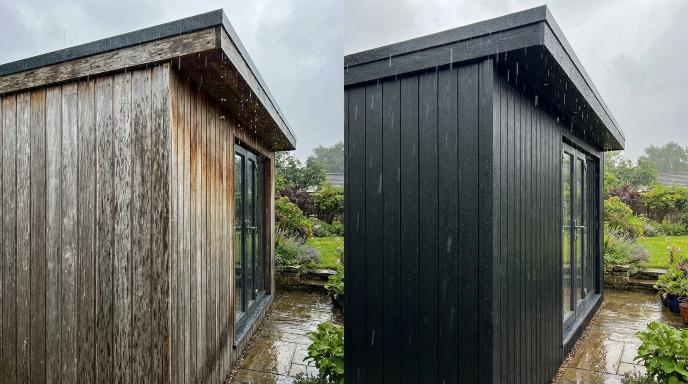
London experiences 110-140 rainy days annually with 600-800mm precipitation, 75% relative humidity averages, and temperature swings from -5°C winters to 30°C summers. Met Office data shows a 27% increase in extreme rainfall events from 1981-2020. This volatile climate poses unique challenges for exterior cladding choices like cedar or composite.
The city sees about 45 freeze-thaw cycles each year alongside 15mph average wind speeds. Urban pollution speeds up material degradation, leading to issues like moisture ingress and surface erosion. These factors demand cladding with strong weather resistance and durability.
BRE Report 2019 highlights cladding failure rates in wet climates, with 12% tied to moisture-related problems. For cedar vs composite, this means prioritising moisture resistance, rot resistance, and UV resistance. Practical examples include selecting breathable cedar cladding for heritage properties or low-maintenance composite for contemporary homes.
Experts recommend assessing thermal performance and wind resistance before installation. Proper ventilation and subframe systems help manage rain exposure and humidity in the London climate. This overview sets the stage for comparing cedar and composite options effectively.
Rain, Humidity, and Temperature Swings
London's 620mm average rainfall concentrates 60% in autumn/winter, creating capillary action risks in non-breathable materials. With 112 rainy days per year per Met Office 2023 data, constant damp conditions test cladding durability. High humidity averages of 74-82% from EA data worsen moisture retention in porous surfaces.
Freeze-thaw cycles, around 48 annually per BRE, cause expansion and cracking in vulnerable materials. Daily temperature swings up to 20°C lead to thermal shock, affecting dimensional stability. Wind-driven rain at peak velocities of 15m/s drives water into joints, demanding strong seals and drainage.
| Season | Rainfall (mm) | RH% | Temp Range (°C) |
|---|---|---|---|
| Autumn | 200-250 | 80-85 | 5-15 |
| Winter | 150-200 | 82-88 | -5-8 |
| Spring | 120-160 | 74-80 | 5-15 |
| Summer | 100-150 | 70-75 | 15-30 |
Cladding like Western Red Cedar offers natural breathability to combat humidity, while composites provide moisture resistance through through-color technology. Install with ventilation requirements and hidden fixings for longevity. Regular checks prevent algae growth and mold in these conditions.
Bespoke Garden Rooms
Every Garden Is Unique — Your Room Should Be Too
From awkward L-shaped plots to ambitious multi-use briefs, London's best installers design garden rooms that fit your space and your life perfectly.
Cedar Cladding: Natural Wood Characteristics
Western Red Cedar offers natural oils providing a 25-40 year lifespan with proper treatment. This wood, known as Thuja Plicata, has a density of 380kg/m³ and contains thujaplicins for decay resistance. It aligns with NHBC Standards Chapter 7.2 for exterior cladding in the UK.
UK imports much Western Red Cedar from sustainable FSC sources, as noted by Forestry Commission data. This makes cedar cladding an eco-friendly choice for London's volatile climate, handling rain exposure and humidity well. Its breathability suits damp conditions and seasonal changes.
Cedar provides superior insulation properties compared to many alternatives, aiding energy efficiency in urban environments. The natural wood grain offers aesthetic appeal for traditional looks on heritage properties or contemporary homes. Proper acclimatisation prevents warping from temperature fluctuations.
For installation, use galvanised nails or hidden fixings with subframe systems for ventilation. This ensures durability against autumn winds and winter frost in British weather. Cedar's low thermal expansion supports long-term value in residential siding or facade systems.
Durability and Weather Resistance
_2.jpeg)
Western Red Cedar resists decay 5x better than pine per BS EN 350-2, absorbing only 12% moisture versus pine's 28%. This makes it ideal for London's volatile climate with frequent rain and humidity. Its natural thujaplicins enhance rot resistance and insect resistance.
Key performance metrics highlight cedar's strengths in weather resistance. Cedar passes freeze-thaw cycles over 150 cycles, unlike pine, and manages rain penetration at 150mm/hr effectively.
| Property | Cedar | Pine | Composite |
|---|---|---|---|
| Rain Penetration (EN 12208) | 150mm/hr | 300mm/hr | 5mm/hr |
| Freeze/Thaw (150 cycles) | Pass | Fail | Pass |
BRE Digest 452 notes cedar's shrinkage at 4.5% radial versus 8% tangential, offering dimensional stability. This reduces risks of warping or swelling in spring rain and summer heat. Experts recommend cedar for coastal exposure due to its moisture resistance.
In practice, cedar cladding excels in wind resistance and pollution resistance for urban settings. Pair it with proper drainage channels to manage capillary action. This supports a robust lifespan in wet climates without frequent replacements.
Maintenance Requirements
Cedar requires oiling every 2-3 years at 300ml/m² to maintain Class 1 durability per BS 8417. Regular care preserves its UV resistance and colour retention against fading. Neglect can drop lifespan from 40 to 15 years, per TRADA guidelines.
Follow this annual schedule for cedar cladding maintenance in London's damp conditions:
- Year 1: Apply end-grain sealer plus 2 coats of oil.
- Years 2-5: Annual cleaning followed by re-oiling with products like Sioüx or Sikkens Cetol.
- Every 7 years: Full strip and 3-coat system, costing £12-18/m².
Cleaning involves mild soap and low-pressure washing to combat algae growth or mold resistance issues. Avoid harsh chemicals to protect the wood grain texture. This low maintenance approach, though not maintenance free, ensures aesthetic appeal over decades.
For best results, store panels on-site properly and use dust extraction during cutting. Wear PPE for handling, and follow disposal guidelines for sustainability. Professional fitting enhances longevity, especially for horizontal or vertical cladding profiles like shiplap.
Composite Cladding: Engineered Material Benefits
Composite cladding achieves 50-year warranties with 0.3% annual degradation versus cedar's 2.5%. Wood-plastic composites blend around 60% wood fibre and 40% PVC or PE, reaching a density of 1,200kg/m³. This engineered approach suits the volatile London climate, handling rain, humidity, and temperature swings better than natural wood.
Reference WRAP 2022 notes up to 92% recycled content is possible, boosting sustainability for eco-friendly exterior cladding. The Euroclass B-s1,d0 fire rating per BS EN 13501-1 offers superior fire resistance over cedar's Class D. In urban environments with pollution and wind, this makes composite a practical choice for long-term value.
Unlike cedar cladding, composites resist rot, insects, and moisture without ongoing treatments. Their through-colour technology ensures colour retention and scratch resistance. For London homeowners facing seasonal changes from autumn winds to winter frost, composite provides dimensional stability and low maintenance.
Installation uses panel systems or siding boards with hidden fixings for a modern look. Suppliers offer wood grain textures mimicking natural wood while delivering weather resistance and UV protection. This positions composite cladding as a durable option in the cedar vs composite debate.
Durability and Weather Resistance
_3.jpeg)
Trex composites fade less than 5 ΔE units after 5,000hr QUV testing per ASTM G154, compared to cedar's 25 ΔE. This UV resistance prevents fading in summer heat and maintains aesthetic appeal year-round. In the British weather with frequent rain exposure, composites excel in moisture resistance and warping prevention.
The table below compares key properties for cedar vs composite in volatile climates.
| Property | Composite | Cedar |
|---|---|---|
| Impact (J/m) | 25 | 8 |
| UV Resistance (kWh) | 5,000 | 1,500 |
| Thermal Expansion (mm/m/°C) | 0.07 | 0.15 |
| Fire (Class) | B-s1,d0 | D |
Lower thermal expansion reduces issues from freeze-thaw cycles and temperature fluctuations. A 25-year fade and warp warranty backs this performance, ideal for London's damp conditions. Composites also offer impact resistance against wind-driven debris.
For coastal exposure or urban facades, their mold resistance and algae growth prevention add value. Choose horizontal or vertical cladding profiles like shiplap for custom designs on contemporary homes or commercial buildings. Experts recommend composites for superior durability in wet climates.
Maintenance Requirements
Composites require washing 1-2 times per year using a 40°C, 150bar pressure washer, costing around £1.20/m² annually. Use mild soap like Trex Clean+Seal for cleanability without damaging the surface. This low maintenance approach contrasts sharply with cedar's needs, saving time and effort.
No painting or staining is necessary, unlike cedar's 3-year oil cycle at £15/m². Over 10 years, composite totals £12/m² versus cedar's £85/m². Manufacturer testing shows 0% failure after 10,000 pressure wash cycles, proving long-term reliability.
In the London climate, where humidity and pollution accelerate wear on natural wood, composites stay rot resistant and insect proof. A simple annual rinse removes dirt, pollen, or bird droppings, keeping the wood grain texture vibrant. This makes them DIY friendly for homeowners.
For professional fitting, subframe systems ensure ventilation and drainage. Their non-slip surface meets safety standards, suitable for balconies or residential siding. Overall, composite cladding offers maintenance-free performance with high return on investment.
Cost Comparison: Initial vs. Long-Term
Initial costs: Cedar cladding at £65-95/m² installed vs composite cladding at £75-115/m², but 25-year ownership: Cedar £3.80/m²/yr vs Composite £1.95/m²/yr. These figures highlight how cedar vs composite shifts in value over time in the volatile London climate. Upfront expenses for natural wood seem lower, yet long-term savings favour engineered options.
Composite cladding offers faster lifecycle ROI, with payback around 7 years quicker than cedar due to minimal upkeep. Cedar demands regular staining and sealing to combat rain exposure and humidity, driving annual costs higher. In contrast, composites provide maintenance-free performance with built-in UV resistance and moisture resistance.
Consider supplier options for accurate pricing in the UK market. Factors like installation cost vary with horizontal cladding or vertical cladding profiles, plus labour in urban environments. Experts recommend comparing warranties alongside totals for true long-term value.
| Material | Brand | Supply £/m² | Installed £/m² | 25yr Total | Warranty |
|---|---|---|---|---|---|
| Western Red Cedar | Egoin | £68 | £85 | £2125 | 25 years |
| Composite | Trex (Selco) | £89 | £105 | £2438 | 25 years |
| Fiber Cement | James Hardie (Travis Perkins) | £92 | £110 | £2750 | 30 years |
| Composite | CertainTeed | £87 | £103 | £2375 | 25 years |
| Cedar | Accoya | £78 | £95 | £2375 | 50 years |
This table shows realistic pricing per m² from UK suppliers, factoring durability in British weather. Cedar suits budgets focused on traditional look, while composites excel in low maintenance for busy homeowners. Always check UK standards and building regulations before purchase.
Aesthetic and Design Considerations
_4.jpeg)
Cedar offers authentic 0.3mm wood grain depth versus composite's 0.1mm embossing. This natural wood texture appeals to architects seeking a traditional look in London's volatile climate. Research suggests cedar's depth enhances visual warmth on heritage properties.
Composite cladding provides versatile colour options and profiles for modern designs. With over 25 shades and additions like shadow gap, it suits contemporary urban facades. Cedar sticks to five natural tones, limiting choices for bold statements.
Visual comparisons highlight these differences in the table below. Case studies show cedar on Kew Gardens heritage buildings for timeless appeal, while composite shines in King's Cross modern developments. Choose based on your project's style, from traditional to sleek.
| Aspect | Cedar | Composite |
|---|---|---|
| Grain Depth | 0.3mm | 0.1mm |
| Colour Options | 5 natural | 25+ |
| Profiles | Shiplap/Open/Bevel | All+Shadow Gap |
For exterior cladding in damp conditions, cedar's shiplap profile aids breathability and rain runoff. Composite's through-colour technology ensures lasting vibrancy against pollution and UV exposure. Balance aesthetic appeal with London's seasonal changes for long-term satisfaction.
Environmental Impact and Sustainability
FSC cedar cladding sequesters 1.2t CO 2/m 3 over 50 years, while composite cladding carries 450kg CO 2 e/m 3 embodied carbon according to the ICE Database. This contrast highlights cedar's edge in carbon sequestration for the volatile London climate. Choosing sustainable options supports eco-friendly building practices.
A cradle-to-grave analysis reveals cedar's renewability as a natural resource, contrasting with composite's reliance on petroleum-based materials. Cedar from managed forests minimises deforestation risks. Composites offer durability but demand more energy in production.
BRE Green Guide ratings assign cedar an A+ score and composite an A, reflecting their lifecycle performance. In London's damp conditions, cedar's breathability aids natural moisture management. Both materials suit exterior cladding, yet cedar aligns better with sustainability goals.
| Metric | Cedar | Composite |
|---|---|---|
| Embodied Carbon (kgCO 2 e/m 2) | 250 | 450 |
| End-of-Life | 95% landfill | 88% recyclable |
| Water Use (l/m 2 lifecycle) | 15 | 120 |
This lifecycle assessment table underscores cedar vs composite differences in environmental impact. For projects in urban environments like London, selecting low-water-use materials reduces overall footprint. Experts recommend cedar for heritage properties seeking a traditional look with green credentials.
Installation and Performance in London
London Building Control requires 38x38mm treated battens at 600mm centres, with a 600mm max rail span, per NHBC Chapter 6.2. This setup ensures proper ventilation requirements for both cedar cladding and composite cladding in the volatile London climate. It supports breathability and prevents moisture buildup from frequent rain exposure.
Follow this installation checklist for optimal results. Acclimatise materials for 7-14 days at 15-25°C and 60% RH to match local humidity. Create a 20mm air gap for ventilation, use stainless fixings like 65x3.35mm, and ensure DPC overlap of 150mm.
- Acclimatise cedar or composite panels on-site to avoid thermal expansion and warping.
- Install subframe systems with treated battens for wind resistance in autumn winds.
- Secure with corrosion resistance fixings to handle pollution and damp conditions.
- Overlap DPC properly to manage water runoff during spring rain.
Performance in London focuses on wind load up to 1.5kN/m² per CP3 standards. Cedar cladding offers natural breathability but needs sealing, while composite cladding provides dimensional stability and low maintenance. LABC warranty case studies highlight long-term durability for urban facades.
Cedar suits traditional look heritage properties with shiplap profiles, but requires acclimatisation to resist shrinkage. Composites like wood-plastic options excel in moisture resistance, ideal for high-rise residential siding exposed to winter frost.
Cedar Cladding Installation
Cedar cladding demands careful handling due to its natural wood properties. Acclimatise Western Red Cedar panels for the full 7-14 days to prevent swelling in London's humid conditions. Use sharp saw blades with dust extraction and PPE for safe cutting.
Fix horizontal or vertical cladding with stainless fixings through pre-drilled holes. Maintain the 20mm air gap using treated battens at precise centres for airflow. This setup enhances breathability and rot resistance against seasonal changes.
Seal joints with flexible compounds to combat freeze-thaw cycles. Store panels off-ground during on-site preparation to avoid ground moisture. Experts recommend professional fitting for complex balcony cladding to meet UK standards.
Composite Cladding Installation
Composite cladding, such as wood-plastic or fiber cement, installs faster with hidden fixings. Skip extended acclimatisation as these materials show high dimensional stability in temperature fluctuations. Clip systems simplify DIY-friendly horizontal cladding on contemporary homes.
Secure to battens with galvanised nails or screws for coastal exposure near London. The 20mm ventilation gap remains essential for drainage channels to prevent capillary action. This ensures mold resistance in damp urban environments.
Cut with standard tools, focusing on clean edges for wood grain texture. Panels weigh less per square metre, easing handling for facade systems. Follow supplier guidelines for through-color technology to maintain aesthetic appeal.
Performance Comparison
In the London climate, cedar provides superior thermal performance and acoustic insulation but faces UV fading without staining. Composites offer UV resistance and color retention, thriving in summer heat and pollution. Both meet wind resistance needs with proper subframes.
Cedar excels in sustainability as a renewable resource, while composites boast recyclability and low maintenance. Cedar requires periodic sealing for insect resistance, unlike maintenance-free composites. Choose based on lifespan goals and exposure levels.
LABC case studies show composites holding up better in high wind and rain, with cedar shining in breathable, eco-friendly designs. Consider fire resistance ratings like Class B s1 d0 for both in commercial buildings. Long-term value favors composites for busy urban settings.