
Reducing Traffic Noise in a London Garden Office
Identify the routes traffic and siren noise take into a garden office, then plan glazing, seals, siting and ventilation around the actual site.
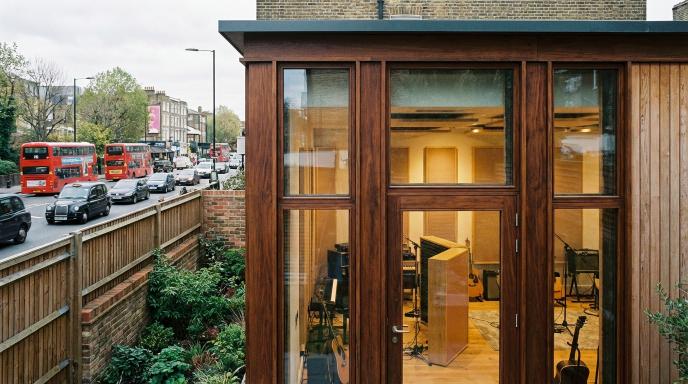
Find the noisy side of the site
Stand at the proposed footprint at the times you expect to work. Note whether road traffic, trains, aircraft or occasional sirens are the main disturbance. A phone app can help you record when noise is worst, but it is not a substitute for a calibrated survey when a performance target or planning decision depends on the result.
Site position matters. A room can sometimes turn its most glazed face away from the road and put storage or a less sensitive wall toward the noise source. Check that choice against daylight, access and the garden’s use.
Ask about glazing, seals and doors together
Sound can enter through glazing, opening joints, a lightweight door or a ventilation opening. Ask for the proposed whole-window and door specifications, frame seals and installation details. A glass unit’s laboratory rating does not describe the performance of a leaky installed assembly. Avoid choosing an upgrade from a generic “cuts noise by 30 dB” claim.
Heavy curtains or acoustic panels may improve comfort inside a room, but they should not be the core plan for stopping outside traffic noise. For a high-noise location, an acoustic consultant can recommend a complete façade and ventilation strategy.
Keep the air fresh without reopening the noise path
Windows left open during calls can undo the benefit of better glazing. Decide how fresh air and summer cooling will work with the windows closed. Put vents and any outdoor condenser where they will not create a new noise problem for you or a neighbour.
Government noise guidance supports designing around the site and building envelope rather than relying on one product. If the room will also contain instruments or amplified music, read our studio acoustic brief; keeping traffic out and keeping music in are different design tasks.
A clearer request for a quote
Send a plan, road-facing photos, the intended desk position and the times you will use the room. Ask the installer to identify glazing and door specifications, seals, ventilation and any acoustic assumption in the written proposal. If the site is unusually noisy, agree a measured performance brief before paying for an upgrade.
Written by
LGR
Editorial Team
London Garden Rooms publishes general guidance to help homeowners prepare project questions. Check planning, technical and pricing details for your own property with the relevant professional.
Related articles
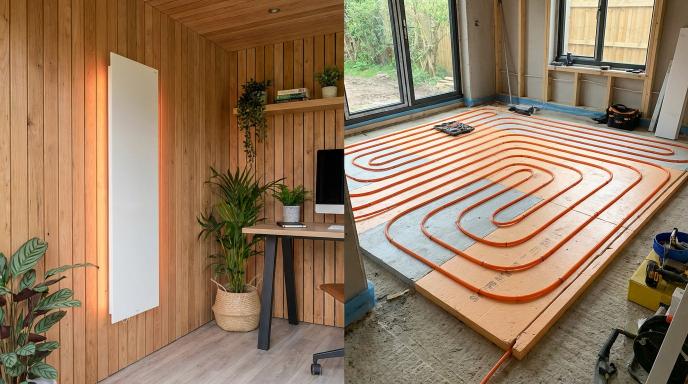
Heating Your Garden Room: Is Infrared or Underfloor Heating More Efficient?
Garden rooms typically require 100-150W/m² heating capacity due to poor insulation (U-values 1.5-2.5 W/m²K), with 20m² spaces needing 2-3kW systems per UK Building Regulations Part L.
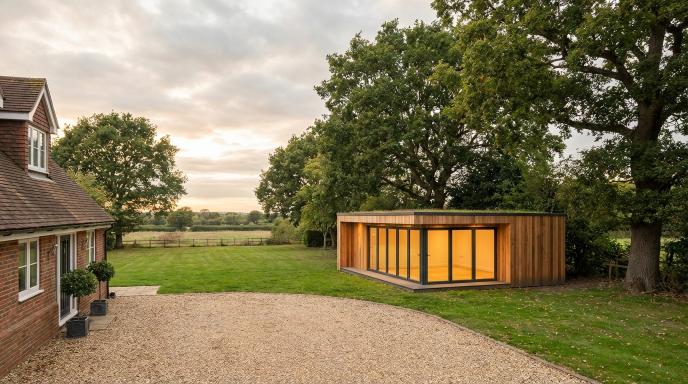
Garden Room Foundations: Ground Screws vs Concrete Slabs
The foundation is the most significant variable in any garden room project — and in London, choosing the wrong one can inflate your budget by thousands. This guide compares ground screws and concrete slabs on cost, logistics, tree safety, and performance in London clay.
Get free quotes
Tell us about your project and we’ll look for relevant installers. Compare each written proposal before you choose.
Get free quotes
Describe your room, location and access to the garden.
Free to enquire. We use your details to respond and, where relevant, connect you with installers. See our Privacy Policy.