Understanding Urban Noise in London
_1.jpeg)
London's urban soundscape averages 70-85 dB during rush hour, with siren peaks hitting 110 dB per UK Noise Mapping data from DEFRA. The city's constant traffic rumble and emergency sirens disrupt daily life for millions. Residents often struggle with noise pollution that affects sleep and focus.
Traffic noise typically ranges from 65-75 dB, while sirens reach 100-120 dB. Construction sites produce 80-95 dB, and neighbor noise sits at 50-70 dB. Part E Building Regulations set a 45 dB max limit between dwellings to promote quieter homes.
Hot spots include Camden with its Tube rumble, Westminster heavy with traffic, and Kings Cross dominated by HGVs. These areas highlight the need for urban soundproofing. Simple measures like double glazing and acoustic panels can help block out city noise.
Experts recommend measuring your own noise levels with a decibel meter app. This identifies peaks from London traffic or sirens. Tailored sound insulation then creates a quieter living space.
Common Traffic and Siren Sources
Traffic contributes heavily to London's noise complaints, peaking at 82 dB on Marylebone Road per GLA reports. City noise varies by source and frequency. Low-frequency sounds like traffic rumble travel further than high-pitched sirens.
- HGVs and traffic rumble: 75-85 dB, dominant at 50-200 Hz for deep vibrations.
- Ambulance and police sirens: 105-115 dB, sharp at 2-5 kHz.
- Tube trains, especially Northern Line: 80-90 dB with persistent rumble.
- Heathrow flyovers: 65-75 dB, steady low hum.
- Construction roadworks: 85-95 dB, erratic bangs and drills.
- Bus engines and taxi horns: 70-80 dB, frequent in congestion.
- Crossrail vibrations: 60-70 dB, felt through floors.
- Nighttime garbage trucks: 75 dB, disrupting sleep.
Low-frequency traffic noise penetrates walls easily, while high-frequency sirens cut through air. Use mass loaded vinyl for bass-heavy sounds and acoustic foam for shrill tones. Track patterns with a sound level app to prioritise fixes.
In areas like Westminster traffic zones or near Kings Cross HGVs, combine window inserts with heavy curtains. This reduces decibels for better peaceful sleep and work-from-home focus. Professional acousticians advise on STC ratings for effective barriers.
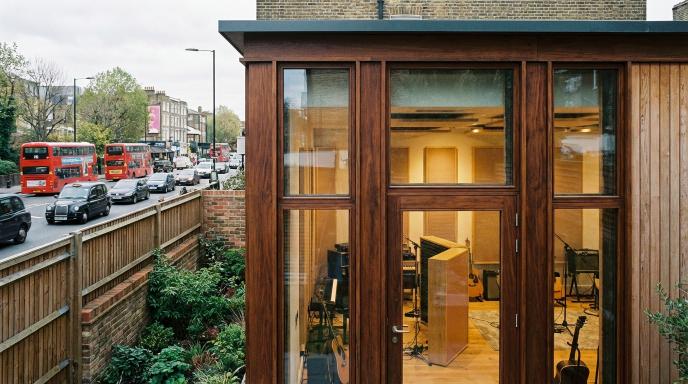
Music Studios
Play Loud, Disturb Nobody
Professional-grade soundproofing with 50dB+ acoustic isolation. Record, rehearse, and produce in a garden studio built for serious sound.
Assessing Your Noise Problem
Accurate assessment reveals if your living room noise exceeds quiet residential standards. Many urban dwellers in London assume traffic rumble or siren wails are unavoidable without proper measurement. Use calibrated tools to check STC ratings and RW ratings for walls and windows.
Test multiple times daily to capture London traffic peaks during rush hour and night-time ambulance sirens. London councils require evidence like decibel logs for noise abatement orders. This data helps prioritise soundproofing for windows or doors.
Focus on city noise sources such as tube rumble from the Northern line or bus engines on Westminster streets. Map hot spots to identify if double glazing or acoustic panels will block out the most intrusive sounds. Experts recommend consistent testing across frequencies for effective urban soundproofing.
Avoid unmeasured assumptions that lead to wasted efforts on ineffective noise barriers. Combine app readings with observations of emergency sirens and construction noise. This approach ensures your apartment soundproofing targets real problems like low-frequency highway noise.
Measuring Decibel Levels at Home
Download NIOSH Sound Level Meter app (free, reliable accuracy) or buy a dedicated device for precise readings. Position the meter at ear height in your quietest room to baseline home acoustics. This captures everyday traffic noise and sporadic police sirens.
Follow these steps for thorough assessment:
- Calibrate the app or meter with a 94dB calibrator.
- Measure A-weighted decibels during calm periods.
- Record a 24-hour Leq average to show daily exposure.
- Use Spectroid app to test across frequency spectrum, noting low-frequency tube rumble.
- Map hot spots near windows or walls.
- Compare to recommended day and night limits from health guidelines.
The process takes about 45 minutes but reveals patterns like higher night peaks from fire truck horns. A common mistake is relying on a single daytime reading, which misses evening street sounds. Retest during rush hour for congestion charge traffic or weekend roadworks.
Spot noise pollution from neighbour arguments or garbage trucks by noting peaks. Use results to choose sound insulation like mass loaded vinyl for walls. This data supports council complaints about persistent delivery van rumble or leaf blower noise.
Soundproofing Fundamentals
STC 50 walls block much of typical 80dB traffic noise from London streets. Understanding core principles like mass, decoupling, and damping helps create effective barriers against city noise. These form the basis of urban soundproofing for apartments facing sirens and traffic rumble.
Start with mass loaded vinyl (MLV) to add weight to walls, blocking low-frequency sounds like bus engines. Combine it with resilient channels for decoupling, which stops vibrations from tube rumble or construction noise. Green Glue provides damping by converting sound energy to heat between layers.
Absorption tackles echoes inside rooms using acoustic panels with good NRC ratings. Follow Part E Approved Document requirements for UK building regs on sound insulation. Measure success with STC or RW ratings for real decibel reduction.
| Principle | Mechanism | dB Reduction | Cost/m² | Examples |
|---|---|---|---|---|
| Mass | Dense materials | 20-30dB | £15-40 | 25mm MLV |
| Decoupling | Resilient channels | 15-25dB | £10-20 | IsoMax clips |
| Damping | Green Glue | 10-20dB | £8/tube | 2 tubes/m² |
| Absorption | Acoustic panels | 5-15dB | £20-50 | 50mm foam |
Use this table to compare options for DIY soundproofing in high-rise flats near Camden noise or Westminster traffic. Layer principles for best results against ambulance sirens and rush hour roar. Experts recommend testing with a decibel meter app before and after.
Windows and Doors: Primary Weak Points
_2.jpeg)
Single-glazed windows leak 35dB of London traffic noise; triple glazing achieves RW 42 per BRE testing. In city apartments, windows and doors let in most airborne sound from sirens and buses. Target air gaps first to cut leaks, then add mass for better sound insulation.
London flats often suffer from traffic rumble and ambulance sirens penetrating thin frames. Secondary glazing boosts RW by 25 without full replacement. This keeps your home quiet during rush hour roar or night-time emergency wails.
Doors with poor seals allow street sounds like taxi horns and pedestrian chatter to enter. Combine door sweeps and perimeter seals for a solid noise barrier. Experts recommend starting here for quick wins in urban soundproofing.
High-rise buildings near Camden noise or Westminster traffic face constant exposure. Proper sealing reduces siren wail and construction din. Pair with heavy curtains for extra defence against rain on windows and wind noise.
Sealing Gaps and Adding Seals
1.5mm gaps leak 20dB; acoustic caulk seals reduce transmission by 15dB. Tiny cracks around frames let in police sirens and bus engines. Start by cleaning to ensure a tight bond.
Follow these steps for effective noise reduction:
- Clean gaps with IPA to remove dirt and grease.
- Apply Green Glue Sealant, a non-hardening option that stays flexible.
- Install 50x10mm EPDM door sweeps at the base for floor gaps.
- Add intumescent acoustic seals to frames, which expand under heat for fire safety.
- Test seals with a smoke pencil to spot remaining leaks.
Materials cost around £60 per door, with work taking 2 hours. Expect a drop from 72dB to 54dB, cutting traffic noise sharply. This DIY fix works well for fire truck horns and garbage truck rumbles.
In London boroughs with roadworks and scaffolding noise, sealed doors create a peaceful sleep zone. Combine with weatherstripping for tube rumble from below. Regular checks maintain performance against urban living din.
Wall and Ceiling Treatments
Party walls in city apartments often leak neighbour noise from London traffic and sirens. Add mass and decoupling to block out noise without losing much space. Comply with Part E regulations by achieving at least RW45 for sound insulation.
Resilient channels plus 12.5mm plasterboard and Green Glue achieve STC 58, as tested by Riverbank Acoustics. This setup targets low-frequency traffic rumble and high-pitched siren wails common in urban living. Install on walls facing busy streets like those in Camden or Westminster.
For ceilings, combine resilient channels with mass-loaded vinyl to reduce tube rumble and ambulance noise from below. Experts recommend decoupling layers to prevent vibration transfer. This creates a quieter home for work from home or peaceful sleep.
Start with acoustic caulk to seal gaps around edges. Layer materials thoughtfully to boost decibel reduction. In high-rise soundproofing, these treatments turn city noise pollution into background hum.
Mass-Loaded Vinyl and Acoustic Panels
2mm MLV at £25/m² combined with Green Glue at £8/tube blocks 28dB of low-frequency traffic rumble. Staple it directly to studs before adding plasterboard. This forms a strong noise barrier against bus engines and delivery vans.
Acoustic panels absorb high-frequency siren wails and pedestrian chatter. Suspend them from ceilings or hang on walls for room treatment. They improve home acoustics without full demolition.
| Material | Thickness | dB Reduction | Installation | Cost |
|---|---|---|---|---|
| MLV | 2-3mm | 25-30dB | Staple to studs | £25/m² |
| Acoustic Panels | 50mm | 15-20dB | Hang/suspend | £35/m² |
| Green Glue | N/A | 20dB | Between sheets | £40/10m² |
| Resilient Channel | 20mm | 18dB | Ceiling/wall | £12/m |
In a Camden flat, STC rating jumped from 38 to 55 using these materials on party walls. This blocked neighbour music bleed and street sounds effectively. Apply DIY soundproofing steps like this for apartment soundproofing in noisy boroughs.
Floor Soundproofing Solutions
Floating floors with 20mm cork underlay reduce impact noise by 28dB (Part E compliance). This setup creates a resilient layer that isolates footsteps and London traffic rumble from vibrating through your city apartment. Ideal for blocking ambulance sirens and neighbour noise from below.
Urban living in London boroughs like Camden or Westminster means constant traffic noise and construction sounds penetrate floors easily. Floor underlay acts as a noise barrier, decoupling the structure to cut decibel reduction effectively. Experts recommend it for high-rise soundproofing where vibrations travel far.
Choose solutions based on your needs, such as lease-friendly options for renters facing council regulations. Combine with rug underlay for added mass against low frequency noise from tube rumble or bus engines. This approach improves home acoustics for peaceful sleep amid city chaos.
Installation is often DIY-friendly, starting with clearing the subfloor and laying underlay evenly. Test with a decibel meter app before and after to measure gains in sound insulation. Professional acousticians advise sealing edges with acoustic caulk for best results.
| Solution | Impact ΔLw | Airborne ΔRw | Cost/m² | Lease-Friendly |
|---|---|---|---|---|
| 20mm Cork | -28dB | +8dB | £18 | Yes |
| QuietWalk Underlay | -24dB | +6dB | £15 | Yes |
| Floating LVT | -22dB | +10dB | £35 | Yes |
| MLV + Carpet | -30dB | +12dB | £45 | No. Reference London council pre-approval requirements for leaseholders. |
Ventilation and HVAC Noise Control
_3.jpeg)
Extractor fans average 55dB; inline silencers reduce to 38dB (Building Regs Part F). In city apartments, HVAC noise from extractors and boilers adds to London traffic and sirens. Effective ventilation noise control keeps air flow while blocking out noise pollution.
DIY soundproofing here takes about 3 hours. Focus on five practical solutions to achieve noise reduction in urban living. Pro tip: aim for systems 20dB below ambient during London quiet hours.
These methods improve home acoustics without sacrificing ventilation. They tackle low frequency hums from boiler flues and high frequency whirs from fans. Combine with door seals for full apartment soundproofing.
- Inline fan silencers (£45, -17dB) fit inside ducts to dampen extractor fan noise, ideal for kitchens facing street sounds.
- Vibration isolation mounts (£12/pack) stop rattles from fans against walls, reducing transmission of tube rumble.
- Acoustic duct liner (£20/m) lines ducts to absorb siren wails and traffic rumble passing through vents.
- Low-sone fans like Manrose MF100LT (28dB) replace loud units for quieter air extraction in bathrooms.
- Boiler flue acoustic boxes (£65) enclose flues to muffle low frequency boiler noise amid rush hour roar.
Install inline silencers by cutting duct sections and clamping them in place. Use mounts under fan housings with rubber pads for vibration isolation. Line ducts with adhesive acoustic material, ensuring it meets fire safety standards.
DIY vs Professional Installation
DIY seals and MLV cost around £500 for about 25dB reduction, while pro full-room treatments run £8,000 for STC 55+ with certification. City dwellers in London often face tough choices between these options when tackling traffic noise and sirens. The right pick depends on your budget, skills, and lease terms.
DIY soundproofing lets you start small with affordable materials like door seals, acoustic panels, and floor underlay. You can apply mass loaded vinyl behind heavy curtains or add green glue to walls in a few hours. This approach suits renters wary of permanent changes in high-rise apartments near Westminster traffic.
Professional installation offers deeper noise reduction, often 30-45dB, using full decoupled walls and resilient channels. Experts handle complex jobs like staggered stud walls or soundproof windows that meet Part E regulations. A Westminster flat case study shows DIY failing council tests, but pro work passing first time with a 10-year warranty.
| Method | Cost | Decibel Reduction | Time | Materials/Methods | Pros/Cons |
|---|---|---|---|---|---|
| DIY | £300-1,500 | 15-25dB | 10-20 hours | Seals, panels, underlay | No warranty, lease risk |
| Professional | £3,000-15,000 | 30-45dB | 2-5 days | Full decoupled walls | Part E certified, 10yr warranty |
Experts recommend assessing your urban soundproofing needs with a decibel meter app before deciding. For severe siren wails or tube rumble in Camden, pros ensure compliance and lasting results against city noise pollution.
Budget-Friendly London Resources
A £250 starter kit offers practical noise reduction for city apartments. It includes secondary glazing film at £60, a mass loaded vinyl door curtain at £80, a white noise machine at £45, and earplugs at £15. These items target London traffic rumble and siren wails effectively.
Shop local for urban soundproofing deals in Camden or Westminster. Facebook Marketplace often lists acoustic panels cheaply, while eBay has door curtains. Check Gumtree for tool hires to avoid big purchases.
Combine products for better decibel reduction. For example, apply window film to block bus engines and tube rumble, then add a white noise machine for sound masking during rush hour roar. This setup creates a quiet home without breaking the bank.
Explore council support for noise abatement. Boroughs like Camden and Westminster offer grants for soundproofing against street sounds and construction noise. Contact your local authority to check eligibility under quiet hours regulations.
| Item | Cost | dB Reduction | Source |
|---|---|---|---|
| Indsound Window Film | £60/window | 15dB | Amazon |
| Soundproof Door Curtain | £80 | 12dB | eBay |
| LectroFan White Noise | £45 | Masking | John Lewis |
| Camden Acoustic Panels | £25/m² | 10dB | Facebook Marketplace |
| London Soundproofing Hire | £50/week | Tools | Gumtree |
The total £250 kit achieves around 25dB reduction when layered. Use a sound level app to measure traffic noise before and after in your high-rise. Focus on low frequency noise from ambulances and police sirens for best results.
Frequently Asked Questions
What is the best way to start soundproofing for the City: How to Block Out London Traffic and Sirens?
The first step in soundproofing for the City: How to Block Out London Traffic and Sirens is to identify noise sources like traffic rumble and siren wails. Conduct a noise audit by noting peak times, then seal gaps around windows and doors with acoustic caulk to prevent sound leakage before adding mass-loaded vinyl or specialised panels.
How effective are double-glazed windows for soundproofing for the City: How to Block Out London Traffic and Sirens?
_4.jpeg)
Double-glazed windows with laminated glass are highly effective for soundproofing for the City: How to Block Out London Traffic and Sirens, reducing traffic noise by up to 30-40 dB. Opt for thicker glass (at least 6mm) and wider air gaps (12-16mm) to specifically dampen low-frequency traffic hum and high-pitched sirens.
What materials work best for walls in soundproofing for the City: How to Block Out London Traffic and Sirens?
For walls, use mass-loaded vinyl (MLV) combined with acoustic foam or mineral wool insulation in soundproofing for the City: How to Block Out London Traffic and Sirens. This combo blocks low-frequency traffic vibrations while absorbing siren echoes, potentially cutting noise by 50% when installed in a decoupled double-wall system.
Can curtains or soft furnishings help with soundproofing for the City: How to Block Out London Traffic and Sirens?
Yes, heavy acoustic curtains made from dense velvet or specialised sound-absorbing fabrics can reduce noise by 10-20 dB in soundproofing for the City: How to Block Out London Traffic and Sirens. Hang them floor-to-ceiling over windows to tackle traffic roar, and add rugs with thick underlay to minimise siren reflections off hard floors.
How do I soundproof a ceiling against upstairs traffic noise in soundproofing for the City: How to Block Out London Traffic and Sirens?
To soundproof ceilings, install resilient channels with acoustic plasterboard and rockwool insulation for soundproofing for the City: How to Block Out London Traffic and Sirens. This decouples the ceiling from vibrations, effectively blocking both constant London traffic from streets below and erratic siren sounds penetrating from above.
Are there affordable DIY options for soundproofing for the City: How to Block Out London Traffic and Sirens?
Affordable DIY starts with weatherstripping doors (£10-20), DIY acoustic panels from rockwool and fabric (£50/room), and secondary glazing film (£30/window) for soundproofing for the City: How to Block Out London Traffic and Sirens. These can achieve 15-25 dB reduction in traffic and siren noise without professional help.